



In daily life, many common facilities rely on fluid control technologies that are often unnoticed. As a valve device designed to automatically prevent reverse flow, check valves are not only widely used in industrial applications but are also increasingly found in residential water supply systems, drainage systems, hot water equipment, and household appliances. With advantages such as automatic operation, reliable structure, and convenient maintenance, check valves play an important role in improving household safety and ensuring stable equipment performance.
In residential water supply systems, check valves are commonly used as supporting components. They control the direction of water flow and prevent backflow in pipelines. For example, when a household water pump stops operating or supply pressure changes, the check valve can automatically close to prevent reverse water flow and pressure fluctuations, protecting pumps and other water supply equipment. Proper installation of check valves can also reduce pipeline impact and improve the stability of the water supply system.
Water heating equipment is another important application area for check valves. In water heaters, solar water heating systems, and hot water circulation equipment, check valves prevent the mixing of hot and cold water and ensure that water flows according to the designed direction. When the hot water system stops operating, the check valve closes promptly to prevent reverse hot water flow, improving energy efficiency and extending equipment service life.
Check valves also play an important role in residential heating systems. For heating equipment equipped with circulation pumps, check valves prevent reverse media flow after the pump stops, helping maintain system pressure balance. When multiple heating areas operate simultaneously, check valves help maintain proper flow direction between different pipelines and improve overall heating performance.
In addition to water supply and heating applications, check valves are also used in household water purification equipment, air conditioning drainage systems, and small-scale water treatment devices. In water purification systems, check valves prevent treated water from flowing backward and reduce the risk of contamination, improving water safety. In air conditioning drainage systems, check valves prevent external water from entering equipment and help reduce potential failures. In small water treatment systems, check valves maintain stable flow and improve operating efficiency.
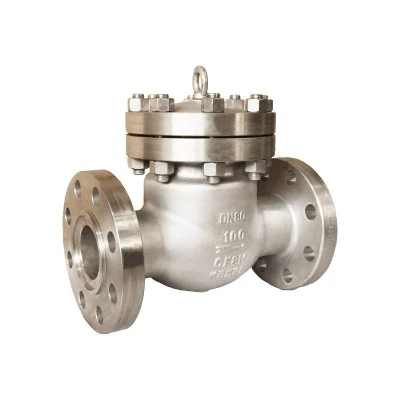
Although check valves are not always visible in daily life, their functions are highly important. Selecting the appropriate check valve requires comprehensive consideration of application conditions, water pressure, pipeline design, and media characteristics. For example, spring check valves are suitable for compact pipeline systems with limited installation space, while swing check valves are more suitable for systems requiring larger flow capacity. Different structural designs meet various household application requirements.
With the continuous development of smart homes and modern building technologies, residential fluid control equipment is also undergoing continuous improvement. In the future, check valves will provide more reliable support for household water systems, energy efficiency, and equipment protection through advanced designs, improved materials, and more efficient manufacturing technologies. Although small in size, check valves play an essential role in maintaining the stable operation of residential facilities.
