



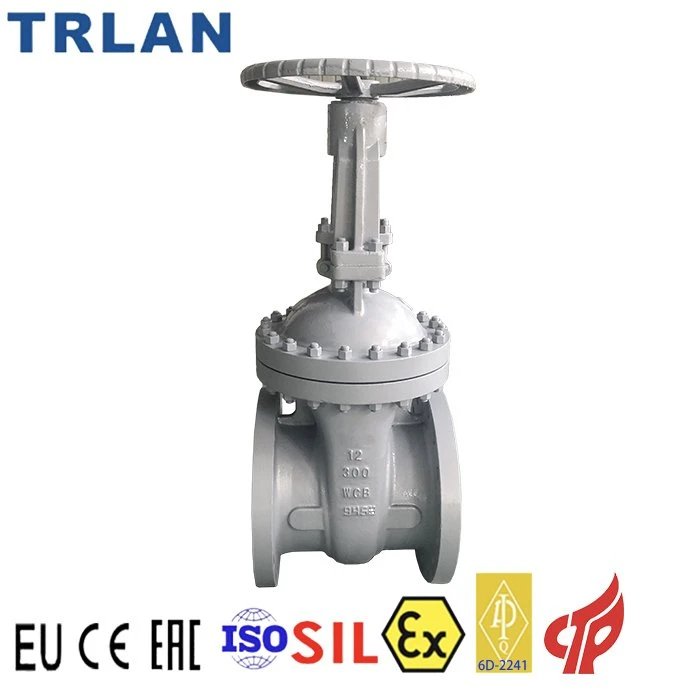
The API 600 Gate Valve is a bolt-lidded steel gate valve manufactured in accordance with the requirements of the American Petroleum Institute's specification refinery and processing plant segregation, ranging in size from NPS 1 to NPS42, 42 a pressure rating of 150 to 2500. It works by driving a wedge gate vertically between two metal seat rings until the wedge itself presses into the two seats and stops the flow of fluid with a metal-to-metal seal. The current standard is to make them heavier than regular commercial gate valves - with thicker walls, larger stem and defined testable features - so they can survive for decades in the heat cycle of hydrocarbon service.
Name is specification, not product category
Say "gate valve" describes a family; say API 600 Gate Valve describes a special, intentionally heavy version. The full name of the standard is Steel Gate Valves-Flanges and Point Welded Ends, Bolted Bonnets. Available in version 14, it will be released in 2021 and is internationally available under ISO 10434. It applies to steel gate valves of grades 150 to 2500 from NPS1 to NPS42 with flanges, button soldering and threaded end connections.
The title defining structural selection is: Bolt bonnet. The bonnet-the pressure cover above the stem opening-is clamped to the body by a bolt ring on a gasketed flange. This allows the valve to be maintained in the pipe: loosen the cover and yoke it up, exposing the stem, stuffing, wedge and seat rings for inspection if the body stays in the pipe. Pressure sealed bonnets predominate at the highest levels of other designs, but in processing plant services, where packaging and seating are expected to be replaced over a 20-to 30-year lifespan, accessibility will prevail.
Three neighbouring standards mark the border. API602 includes compact forged gate valves for small caliber pipelines; API 6D includes pipeline valves where piggy handling and double blocking and discharge can be performed; and ASME B16.34 provides the pressure temperature grades and material types upon which API600 600 based. API 600 Gate Valve is a heavy product in this series, suitable for infrequent use and long time high temperature
corrosion.
How the mechanism works
Gate valve is a linear motor. The handwheel rotates a stem that cannot be removed from the nut, and the stem rises; mounted on the stem is the gate - a wedge or parallel disc - that runs between full opening and full closure. Nothing swirled in the flow: the door flowed like a drawer.
This geometry has three results, each of which explains a standard feature:
The stem position speaks for itself. Because the valve is arranged using external threads and yoke (OS&Y) risers, the stem threads are located outside the pressure envelope above the yoke. Operators can tell at a glance if the valve is open or closed-the exposed stem length is a position indicator and does not need to be measured.
Rear seats are a maintenance technique. Near the top of its trip, the stem returns to the mechanical seat of the cover, separating the filling from the pipe pressure. This allows gland packing to be replaced when the valve is under pressure and the load is carried by the back seat.
Seals are metal to metal. Cuneiform seat relative to ring surfaces machined into the body, API 600 provides that the seating surfaces be metal to metal. Push the wedge, which is slightly narrower than the gap between seats, into the seat until its tapered faces grabs both rings at the same time; then apply linear pressure to increase pressure on the downstream seat, increasing pressure on the seal.
Full openness is the only honest place to rest. As the hole is cleared, flow is essentially straight through; the valve is an isolation device that opens or closes completely, with little contact in the middle.
Why the standard makes valves heavier
At the heart of API 600's engineering is a set of force dimensions that exceed the normal service requirements. The minimum wall thickness of NPS 4 valve body ranges from 11.2mm in Class Class 150 to 35.8 mm in Class 2500 -most dimensions are several millimeters thicker than an equivalent ASME B16.34 general-purpose valve. Minimum diameter of the stem is also tabulated: 31.75 mm in Class 150 to 60.33 mm in Class 2500 at NPS8.
The logic is that the gate valve used by refiners go through heat cycles, vibrations, corrosion allowance and decades of oblivion until they are suddenly needed. The stem is only as big as the torque at the time of transmission, and after twenty years of corrosion, the torque is too small; when corrosion erodes the permitted torque, there is little left of the stem for first day of pressure. The tabulation also includes minimum aperture, package size and a "wear travel" -reserving extra stem travel so the seat surface can be tightly closed after wear and tear during use.
That's why the standard is so popular outside of refineries. Because every compliant valve, regardless of who made it, meets the same minimum requirements, buyers in many industries use API 600 as an inventory specification: any replacement taken from a warehouse fits, seals and the torque it replaces.
Wedges, Thermal Binding and throttling bans
The gate itself is usually a flexible wedge-a single disc with a a grooved rim that allows the seating surface to bend independently by a few degrees. The reason is thermal bonding: solid wedges clamped between two metal seats grip themselves in place as the body heats and expands, and no handwheel torque pulls them away. Flexible rims ease clamping, double disc design, dispersed rear seats serve the same purpose, conditions permitting.
Another hard rule is operability, not size: gate valve do not throttle. When the wedges burst, they were overflowing like dams - washed away by the water rushing over the seating surfaces at high speed, while the flexible gates shook under unstable loads. The correct tool for regulating flow is the globe valve, which is geometrically designed for stoppers. In fact, failure reports that begin with "valve only partiallyopen" usually end at the corroded seat, and damage can be seen within minutes of the flow starting.
How to prove compliance
Each valve is factory-inspected, and the inspection chain converts size conformity into a sealed, verifiable product. Shell and seat pressure test is conducted in accordance with API 598: the shell static pressure test is 1.5 times the pressure-temperature rating, no significant leakage is permitted through the wall, cover connector or pressure cover, the seat test is 1.1 times the rated value and there is a leakage limits the test fluid. Design qualification for stem leakage into atmosphere follows API 624, a refugee emissions type test based on the packaging performance verified by API 622.
The nameplate have audit trail: API 600 and ASME B16.34 markings, material type, category, size and finish number. Seat, gate and stem materials are combined with API 600 form numbers, ranging from 13Cr at commonly used endpoints corrosive or erosive service corrosive cobalt-based hardfacing and nickel alloys, so purchase order can specify exactly what comes into contact with fluids in double-digit numbers.
Where Valves Belong-and Don't
Rating algorithm from ASME B16.34: A216 WCB carbon steel is rated at 38 °C at approximately 98.6 bar and decreases as temperature climbs toward the material creep range. Face to face dimensions follow ASME B16.10 (or ISO 5752) and end flanges follow ASME B16.5 up to NPS24 and B16.47, so that valves enter pipes designed to other standards without incident.
API 600 Gate Valve can be used in refineries and petrochemical production lines-crude oil installations, hydrogenation installations, steam and utility equipment-where valves can be opened for months for isolation and maintenance and must still be sealed after circulating between ambient temperatures and hundreds of degrees. It is not a place where flow is modulated, where pipes must be able to carry, or where double segregation and bloodletting are prescribed-that is, globe-valve and API 6D jobs. Choosing it anywhere else as the default option means paying for wall thickness that the service has never used.
What a Buyer should specify
A purchaser's annex to the standard requires a shortlist, and each item eliminates different ambiguities:
Dimensions, pressure levels and end connection – envelopes.
Body and trim material are determined by a list of numbers-the things that touch the fluid.
API 624 low-emission qualification-Packaging and Valve Seal Promises
Bypass, cannula drains or special operators-site realities.
One sentence answers all four questions and is worth reading; one sentence does not answer all questions and is to sell a number, not a valve.
Frequently Asked Questions
What is the difference between API 600 valve and a standard ASME B16.34 gate valve? Same pressure-temperature rating and end dimensions, but API 600 requires heavier walls, larger stem, minimum aperture, rear seats, single bolt bonnet and full API 598 production testing. Instead of sharing a wall thickness, two valves can share a component number.
Can API 600 gate valve be used for throttling? No. Partial opening will corrode metal seating surface and vibrate the gate. Regulation valve belongs to the check valve or control valves.
Why does the stem rise outside the valve? The outer thread and yoke design to thread the stem away from the process fluid and provide visible opening/closing instructions; the backseat at the top of the stroke also allows for filling to be replaced under pressure.
Bottom line
When a simple mechanism-the wedge in the slot-is surrounded by specifications that rule out all shortcuts, the API 600 Gate Valve is what you get: wall thickness than the passable minimum, a corrosion-resistant stem diameter, a cap that opens in the pipe, and tests to prove each unit before shipping. Mechanisms have changed little over a century; the standard's job is to ensure that the century of service is real.
Source of information
American Petroleum Institute API Standard 600, Steel Gate Valves, Flanged and Point Welding Terminals, Bolted Bonnets, 14th Edition, 2021: Range, Design Table, Decoration, Testing, Marking.
American Petroleum Institute API 598, Valve testing and inspection: shell and seat acceptance criteria.
American Petroleum Institute API 624 and API 622: Fugitive Emission Type Testing and Packaging Qualifications.
ASME- B16.34, Valves-Flanges, Threads and Welding End: Pressure Temperature Class, Material Group.
ASME-B16.10, B16.5, B16.47, B16.25: Faceto face and terminal connection dimensions.
ISO-10434: International version of specification for bolted bonnet steel gate valve.